Rail transport
Wheeled vehicles on steel rails for efficient land transport.

Rail transport is a mode of land transport using wheeled vehicles running on tracks, typically two parallel steel rails. It is one of the two primary means of land transport, used for about 8% of passenger and freight transport globally due to its energy efficiency and potential for high speed. Railroads dramatically lowered shipping costs and travel times, becoming a key component of the Industrial Revolution and enabling the development of national markets.
- Primary power sources
- Diesel or electric locomotives
- Key advantage
- Lower frictional resistance than rubber-tyred vehicles
- Global share
- About 8% of passenger and freight transport
Lore & Background
In the 16th century, wooden-railed wagonways hauled by horses became popular in Europe for mining, with the Reisszug funicular railway at Hohensalzburg Fortress in Austria possibly the oldest operational railway. Metal rails were introduced in the late 1760s, with cast iron plates fixed to wooden rails, later evolving into edge rails and flanged wheels that became standard.
Reader's Guide
Rail transport's significance lies in its transformation of travel and commerce. By the 19th century, railroads lowered shipping costs compared to water or wagon transport, enabling faster and cheaper movement of goods and people. The first transcontinental railroad in the United States allowed crossing the country in days rather than months at one-tenth the cost of stagecoach or wagon, making farming, ranching, and mining profitable in the West. Despite competition from cars and airplanes, rail transport has revived due to road congestion, rising fuel prices, and government investment to reduce CO2 emissions.
Did You Know?
- The Bessemer process, enabling inexpensive steel production, led to great railway expansion starting in the late 1860s, as steel rails lasted several times longer than iron.
A Network of Two Worlds
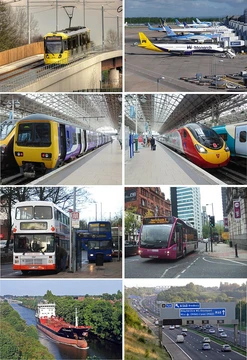
The UK's rail system is not one unified entity but two entirely separate networks. In Great Britain, the backbone is formed by five high-speed main lines—the West Coast, East Coast, Midland, Great Western, and Great Eastern—that fan outward from London and other major cities. Regional services and dense commuter loops fill in the gaps between these corridors. High Speed 1 stands apart as an operationally independent line, engineered to the same specifications as France's TGV system.
From Dominance to Reclaiming Ground
Over the following decades, car use climbed steadily and bus ridership fell, but rail quietly grew its own share. The real turning point arrived in the 1990s, when rail began reclaiming passengers from private cars, doubling its slice of total passenger-kilometres from 5% to 10%. This upward trajectory ran parallel to the privatisation of British Rail, a structural overhaul that reshaped how the network was owned and operated. The trajectory suggests rail has moved from a declining legacy to a growing pillar of British mobility.
Freight: The Great Migration to Road
Rail once carried the bulk of Britain's goods. This dramatic modal shift away from track toward tarmac represents one of the most striking transport transformations of the twentieth century. The environmental picture is mixed; while the external costs of trucking have reportedly fallen thanks to a faster fleet turnover and cleaner articulated vehicles, the sheer volume of road freight remains a persistent pressure on the environment.
The Climate Crossroads
Transport overtook every other sector to become the UK's largest source of greenhouse gas emissions in 2016, a milestone that has made the rail system's role in decarbonisation all the more critical. The Climate Change Committee has outlined a pathway requiring transport to reach net-zero emissions through a combination of demand reduction, more efficient combustion engines, a shift toward non-car-based modes, and full electrification of the vehicle fleet. Within this framework, rail's electric traction and capacity to move both passengers and freight offer a natural alternative to road and air.
Frequently Asked Questions
What exactly is rail transport?
Rail transport is a land-based system in which wheeled vehicles travel along a pair of parallel steel rails. It sits alongside road transport as one of the two main ways people and goods move across land.
What powers rail transport?
The two dominant power sources are diesel engines and electric traction, both delivered through locomotives that haul passenger or freight cars. The choice between them depends on infrastructure, route terrain, and local energy policy.
Why is rail more energy-efficient than trucks or buses?
Steel wheels rolling on steel rails generate far less frictional resistance than rubber tires on asphalt, so a given amount of energy moves more weight over a longer distance. That physics advantage is a core reason rail remains competitive for heavy freight and high-speed passenger service.
What was rail transport's role in the Industrial Revolution?
Railroads slashed both the cost and the time of moving raw materials and finished goods, which in turn stitched together regional economies into national markets. Without that logistical backbone, the factory system and urban growth of the 19th century would have expanded far more slowly.
How big is rail's share of global transport today?
Rail accounts for roughly eight percent of the world's combined passenger and freight movement. Despite that modest percentage, its per-tonne-kilometre efficiency makes it disproportionately important for long-haul freight and dense urban commuter networks.
More in Transportation 25-34
Elsewhere in the Transportation universe
Spotted an error? Know more?
This is a living reference — every entry is fact-audited, and reader corrections feed straight into our audit queue. Suggest an edit · See this site's audit record