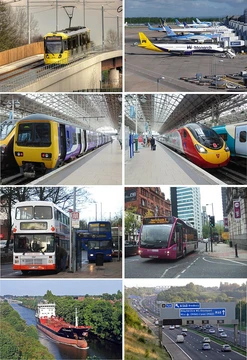
Driving
Controlled operation of land vehicles with evolving skills and laws.

Driving is the controlled operation and movement of a land vehicle, including cars, taxis, ambulances, fire engines, tanks, vans, trucks, and buses. Driving requires both physical and mental skills, as well as an understanding of the rules of the road.
- Etymology origin
- 15th century
- Annual road traffic deaths (2023 estimat
- 1.19 million
- Leading cause of death for ages 5-29
- Road traffic accidents
Lore & Background
The word "driving" has etymology dating back to the 15th century, with its meaning changing from primarily driving working animals to automobiles in the 19th century. Driving skills have developed since the 15th century, with physical, mental, and safety skills being required to drive. Physical skills include proper hand placement, gear shifting, pedal operation, steering, braking, and operation of ancillary devices. Mental skills involve hazard awareness, decision-making, evasive maneuvering, and understanding vehicle dynamics.
Reader's Guide
Driving is a fundamental activity governed by laws that vary between jurisdictions. Most countries require drivers to pass practical and theoretical driving tests to obtain a license. Safety concerns include poor road conditions, low visibility, texting while driving, speeding, impaired driving, sleep-deprived driving, and reckless driving. Many jurisdictions use point systems for driver's licenses to track offenses, and a modern counterpart is driver scoring using telematics. The evolution of driving skills has been accompanied by the introduction of driving laws relating to both the driver and the driveability of a car.
Did You Know?
- The term 'driver' originated in the 15th century, referring to driving working animals like pack or draft horses.
- Distractions such as mobile phones can impair a driver's mental skills more than alcohol intoxication, according to one study.
The Software Architecture of Self-Driving
Behind every autonomous vehicle lies a tightly coordinated software stack that splits the enormous task of driving into specialized modules. The perception layer continuously ingests raw data from an array of sensors—cameras, LIDAR, RADAR, ultrasonic SONAR, and even microphones—building a rich picture of everything around the vehicle: other cars, pedestrians, cyclists, road surfaces, and unexpected obstacles. A separate localization module fuses three-dimensional point-cloud data with GPS signals, inertial measurement units, and pre-loaded maps to pin down the vehicle's exact position, heading, speed, and angular rate. The planning module then synthesizes outputs from both perception and localization to decide on concrete actions like target velocity and steering angle. Underpinning all three layers are machine-learning algorithms, especially deep neural networks, that let the system recognize objects, read traffic patterns, and react in real time. Modern implementations also lean heavily on sensor-fusion techniques, blending inputs from multiple sensing modalities so that accuracy and reliability hold up across varied weather and lighting conditions.
Navigation, Mapping, and Positioning
Getting an autonomous vehicle from point A to point B requires more than just knowing where it is; it demands a reliable strategy for interpreting the road ahead. Global navigation satellite systems serve as a universal backbone for positioning across air, water, and land, and are especially critical for off-road scenarios. On public roads, two dominant philosophies emerge. The first relies on maps that store lane geometry and intersection data, leaving the vehicle's perception system to fill in the dynamic details in real time. The second approach uses highly detailed, pre-built maps that narrow the scope of on-the-fly decision-making, though this comes at the cost of significant ongoing maintenance as streets change. Some operators sidestep the maintenance burden by crowdsourcing updates: the vehicles themselves report new construction zones or traffic shifts back to a shared fleet-wide map. Roadside monitoring infrastructure can also feed live traffic data to help route vehicles efficiently. At the positioning level, enhancement technologies such as real-time kinematic and precise point positioning push GNSS accuracy down to sub-meter precision, a threshold that is essential for safe autonomous navigation.
Pioneering Experiments and the Vision of Platooning
The story of machine-driven vehicles stretches back to the late 1970s, when graduate student Hans Moravec built the Stanford Cart. The device was essentially a box mounted on four bicycle wheels, equipped with a single camera, a battery, and a radio antenna that linked it wirelessly to a remote computer. Moravec managed to get the Cart to navigate around large obstacles inside a hundred-foot-long room, though the process was glacial—each image had to be sent to the computer, analyzed, and a navigation instruction sent back, so a single run consumed roughly five hours. The project was conceived as a precursor to NASA's lunar and Martian lander programs, where radio signal lag would have made remote control impractical. About two decades later, Carnegie Mellon's Robotics Lab introduced ALVINN, a vehicle carrying three Sun Microsystems computers that used a camera and a laser range finder to slowly trace the white divider line down a road. In Europe, the Sartre project explored a different ambition: platooning, where a convoy of cars and trucks follows a human-driven lead vehicle, allowing drivers to delegate control and travel in a safe, comfortable formation.
Field Testing, Safety Research, and Regulation
Moving from laboratory to public roads has been both a promise and a cautionary tale. Uber's self-driving cars were tested on the streets of Pittsburgh, Pennsylvania, but the program was suspended after an autonomous vehicle struck and killed a pedestrian in Arizona. In California, automated buses have undergone trials, with one San Diego test relying on magnetic markers for guidance, while longitudinal control of automated truck platoons has been demonstrated using millimeter-wave radio and radar. On the safety front, the AAA Foundation for Traffic Safety evaluated automatic emergency braking systems in popular models including the 2016 Volvo XC90, Subaru Legacy, Lincoln MKX, Honda Civic, and Volkswagen Passat. The study distinguished between systems engineered to prevent a collision and those designed to reduce its severity. It found that crash-prevention systems cut vehicle speed by roughly twice as much as mitigation systems, and that even the latter avoided a collision sixty percent of the time when two vehicles approached each other at speeds within thirty miles per hour. In the European Union, legislation draws a legal line between advanced driver-assistance systems and fully autonomous vehicles, a distinction rooted in how liability is assigned.
Frequently Asked Questions
What is Driving in the context of Transportation 1-24?
Driving refers to the deliberate, controlled operation and movement of any land-based vehicle, ranging from personal cars and taxis to larger vehicles like buses, trucks, ambulances, fire engines, and even military tanks.
What skills does Driving require?
It demands a combination of physical coordination and mental focus, along with a solid grasp of applicable road rules and regulations.
How old is the concept behind the word 'Driving'?
The term traces its etymological roots back to the 15th century, reflecting how long humans have been formally naming the act of guiding a vehicle.
What is Driving's most significant real-world consequence?
Road traffic accidents remain the leading cause of death for people aged five through twenty-nine, and an estimated 1.19 million road-traffic deaths occurred globally in 2023 alone.
Why is Driving considered an evolving discipline rather than a static skill?
Because the vehicles involved, the traffic laws governing them, and the operational techniques expected of drivers all continue to shift over time, keeping the practice in a state of ongoing development.
More in Transportation 1-24
Elsewhere in the Transportation universe
Spotted an error? Know more?
This is a living reference — every entry is fact-audited, and reader corrections feed straight into our audit queue. Suggest an edit · See this site's audit record