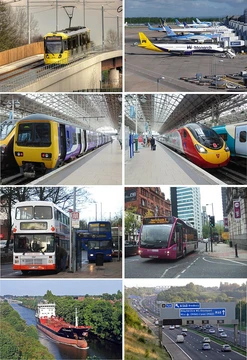
Riverboat
Inland watercraft for freight, passengers, and entertainment on rivers and lakes.

A riverboat is a watercraft designed for inland navigation on lakes, rivers, and artificial waterways. These vessels are generally equipped and outfitted as work boats in the carrying trades, for freight or people transport, including luxury units constructed for entertainment enterprises such as lake or harbour tour boats. Riverboats are typically less sturdy than ships built for the open seas, with limited navigational and rescue equipment, and can be built from light composite materials. Their significance depends on the number of navigable rivers and channels as well as the condition of the road and rail network, providing slow but cheap transport especially suited for bulk cargo and containers.
- field
- Inland water transport
- known_for
- Designed for navigation on rivers, lakes, and artificial waterways; used for freight, passenger transport, and entertainment
- notable_region
- Midwestern and central southern United States (Mississippi, Ohio, Missouri rivers)
- propulsion_types
- Sails, oars, towpaths, steam (paddlewheel), modern diesel screw (propeller)
Lore & Background
Roman sources dated 50 BC mention extensive transportation of goods and people on the river Rhine. Upstream, boats were usually powered by sails or oars. In the Middle Ages, towpaths were built along most waterways to use working animals or people to pull riverboats. In the 19th century, steamboats became common. The most famous riverboats were on the rivers of the midwestern and central southern United States, on the Mississippi, Ohio and Missouri rivers in the early 19th century. These American riverboats were designed to draw very little water, and it was commonly said that they could 'navigate on a heavy dew'.
Reader's Guide
Riverboats have played a crucial role in the economic development of regions with navigable waterways, particularly where road and rail networks were inadequate. They provided slow but cheap transport for bulk cargo and containers, and were essential for passenger travel in areas like the Mississippi River system and the Murray River in Australia. Modern riverboats include luxury tourist vessels comparable to oceanic cruise ships, high-speed passenger boats, and local water taxis. The design of riverboats is constrained by river width, depth, and bridge height, leading to shallow-draft vessels like the paddlewheel steamers that could operate in water under two metres deep. Their legacy is preserved in museum ships such as the WT Preston, a specialised river dredge, and in annual celebrations like 'Riverboat Days' in Terrace, British Columbia.
Did You Know?
- Riverboats can be built from light composite materials because they do not have to withstand high winds or large waves.
- Early Mississippi River paddlewheel steamers could operate in water under two metres deep.
- The Kalgan Queen riverboat in Western Australia lowers her roof to get under a low bridge.
- Modern riverboats are generally screw-driven with pairs of diesel engines of several thousand horsepower.
Frequently Asked Questions
What is a riverboat?
A riverboat is a watercraft purpose-built for navigating inland waters such as rivers, lakes, and man-made canals. Because they operate in sheltered, calmer environments, they are generally lighter and carry less navigational or rescue equipment than ocean-going vessels.
What are riverboats used for?
They function as work or commercial platforms on inland waterways, handling freight, moving passengers, and serving as luxury tour boats for entertainment. Their role spans practical cargo hauling all the way to leisure and tourism operations.
Where are riverboats most strongly associated?
They are most closely tied to the Midwestern and central southern United States, especially along the Mississippi, Ohio, and Missouri river systems. Their regional prominence depends heavily on the number of navigable rivers and channels available in a given area.
How are riverboats powered?
Across their history, riverboats have been driven by sails, oars, towpaths, steam-powered paddlewheels, and modern diesel screw propellers. The specific propulsion method depends on the era and the vessel's design.
How do riverboats differ from ocean-going ships?
Riverboats are typically less robust than ships built for open-sea conditions and are often constructed from lighter composite materials. They carry limited rescue and navigational gear because they never face the rigors of exposed ocean environments.
More in Transportation 1-24
Elsewhere in the Transportation universe
Spotted an error? Know more?
This is a living reference — every entry is fact-audited, and reader corrections feed straight into our audit queue. Suggest an edit · See this site's audit record